 (213) 891-0909


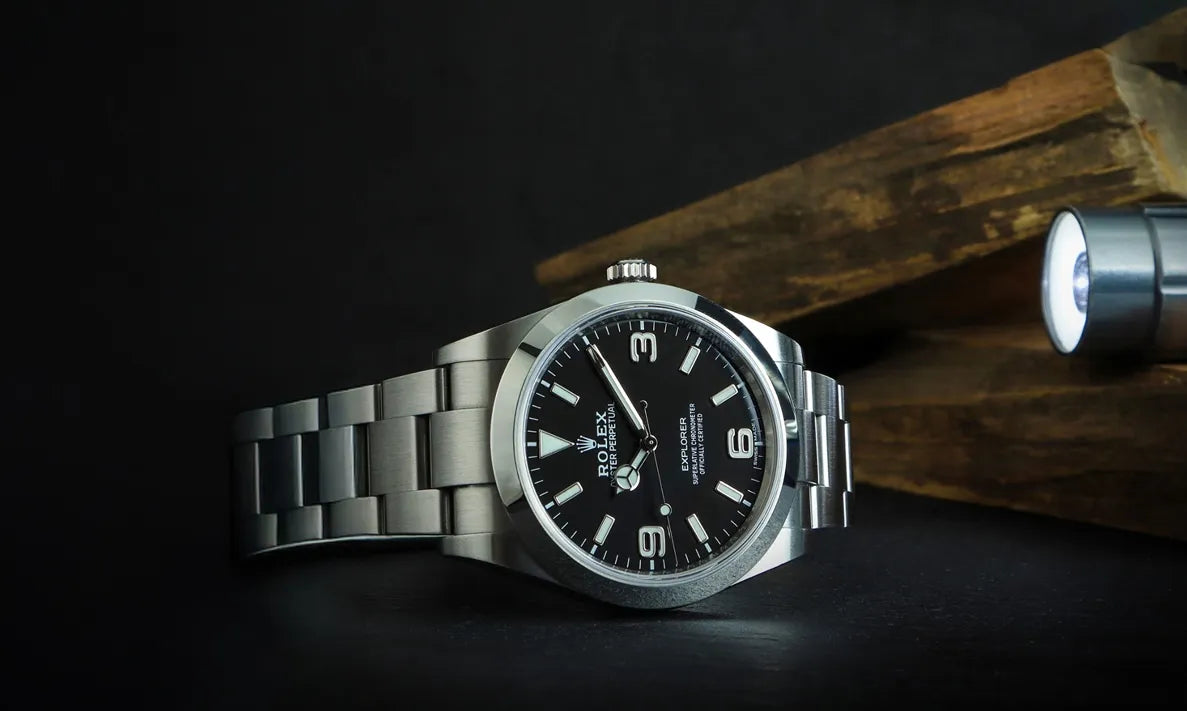

Spotting a fake Rolex comes down to knowing what a genuine one looks like, feels like, and moves like. Counterfeit Rolex watches have become increasingly sophisticated, but they still can't replicate the sum of details that Rolex has refined over decades of Swiss manufacturing.
Whether you're shopping at a pre-owned dealer, browsing a private sale, or re-examining a piece you already own, this guide walks you through every major authentication checkpoint. The goal isn't to make you paranoid — it's to make you confident.

What Makes a Rolex Authentic: The Baseline
Rolex produces every component of its watches in-house, from the movement to the bracelet clasp to the crown logo on the winding crown. That level of vertical integration is exactly what makes counterfeits so easy to detect once you know what to look for.
A genuine Rolex is built to tolerances that most consumers never think about. The weight distribution, the finishing on every surface, the precision of the text on the dial — none of it is accidental. Counterfeiters often get one or two things right and miss everything else.
Read more: Rolex movement types explained — what's inside a genuine Rolex
The Movement: The Most Telling Test
The easiest way to spot a fake Rolex is to observe the seconds hand. On a genuine Rolex, the seconds hand moves in a near-silent, smooth glide — 8 ticks per second from the automatic movement, imperceptible to the naked eye. This is often described as a "sweeping" motion.
Counterfeit Rolex watches almost universally use cheap quartz or low-grade automatic movements. These produce a distinct tick-tick-tick motion, with one visible step per second for quartz pieces. No matter how good the dial looks, a stepping seconds hand means it's not genuine.
What to listen for: A real Rolex movement is near-silent. Place it close to your ear. You should hear essentially nothing. A loud ticking is a red flag immediately.
If you have access to the caseback, a genuine Rolex will have a solid, non-exhibition caseback on most models (the Submariner, GMT, Datejust, and Daytona all use closed casebacks). Be skeptical of any Rolex with a display caseback showing the movement — Rolex doesn't produce those except in extremely rare vintage pieces.
The Weight: Feel It in Your Hand
A genuine Rolex has significant heft. The combination of solid 904L stainless steel (or 18k gold), the movement, the sapphire crystal, and the solid bracelet links creates a watch that feels substantial the moment you pick it up.
Fakes are typically lighter because they use hollow bracelet links, lower-grade metal alloys, and cheap movements. The difference is immediately noticeable side-by-side, and with experience, even alone.
|
Feature |
Genuine Rolex |
Counterfeit |
|
Bracelet links |
Solid, no flex when bent |
Hollow, slight rattle or flex |
|
Case weight |
Dense, balanced |
Lighter, top-heavy, or uneven |
|
Crystal |
Sapphire, no distortion |
Mineral glass, often with wavy distortion |
|
Crown logo |
Micro-engraved, three-dimensional |
Flat, stamped, or missing |
|
Seconds hand |
Smooth sweep (8 Hz) |
Visible tick/step |
The Dial: Where Fakes Usually Slip Up
The dial is where most counterfeiters invest the most effort — and where the most details still go wrong.
Text and Printing Quality
On a genuine Rolex, every line of text on the dial is razor-sharp. "ROLEX," "OYSTER PERPETUAL," and the model name are applied with precision that holds up under a loupe. The fonts are exact. The spacing is consistent. There's no bleeding, no blurring, no uneven weight between letters.
Look closely at the "SWISS MADE" text at the 6 o'clock position. On authentic dials, it's small but perfectly legible. Fakes often get the font slightly wrong or make it too large.
Applied Indexes and Luminova
Rolex uses applied hour markers — meaning the rectangular or circular indexes are separate pieces of metal adhered to the dial surface, not painted on. These markers cast a tiny shadow because they have real depth. Fakes typically use printed indexes, which look flat and have no shadow.
The luminova (lume) should also be consistent across all markers and the hands. Genuine Rolex lume has a slightly creamy or greenish tone in daylight and a bright green or blue glow in the dark. Mismatched or uneven lume application is a warning sign.

The Cyclops Lens
Models like the Datejust and GMT-Master II feature a Cyclops lens — a magnifying bubble over the date window. On genuine Rolex watches, this lens provides exactly 2.5x magnification, making the date fill almost the entire window and appear very clear.
On counterfeits, the Cyclops lens either doesn't magnify at all, magnifies too little, or produces a blurry, off-center date display. This is one of the quickest visual checks you can do without any tools.
📌 Related reading: The ultimate guide to the Rolex Datejust
The Crown Logo and Engravings
The Winding Crown
The winding crown on every genuine Rolex features a tiny engraved Rolex coronet logo. This detail is three-dimensional and visible to the naked eye, though a loupe helps confirm it. On counterfeits, this logo is often flat, stamped instead of engraved, or simply missing.
The Rehaut
The rehaut is the inner chapter ring between the dial and the crystal. On modern genuine Rolex watches (roughly post-2002), the word "ROLEX" is laser-engraved around the entire rehaut, repeated at every hour position. This micro-engraving is incredibly fine and essentially impossible for counterfeiters to replicate accurately.
Run a finger along the rehaut and look for texture. On authentic pieces, the engraving is crisp. On fakes, the text is often too thick, blurry, or missing entirely.
The Caseback
As noted, genuine Rolex watches have solid, smooth casebacks with no engravings on the outer surface (except certain vintage references). The caseback should screw down flush and tight with no gaps or wobbles.
Be suspicious of casebacks with large crown logos, model information printed on the exterior, or screws. That's not how Rolex builds its watches.
The Bracelet: An Overlooked Checkpoint
Counterfeit bracelets are almost always the weakest point of a fake Rolex. Genuine Rolex Oyster, Jubilee, and President bracelets are made with solid links, precise folding, and tight tolerances. There's no rattling, no side-to-side wobble in the links, and the clasp mechanism feels secure and smooth.
Browse our authenticated Rolex collection at Time of Swiss
Signs of a fake bracelet:
- Hollow links that flex or rattle
- Uneven finishing between brushed and polished surfaces
- Clasps that feel loose or require force to close cleanly
- Missing Rolex crown stamps on the clasp
On genuine Rolex bracelets, the Glidelock or Easylink adjustment mechanism (depending on the model) should work smoothly with a satisfying click at each increment. Fakes either don't have these systems or implement them poorly.

The Serial and Model Numbers
Every genuine Rolex has a serial number engraved between the lugs at the 6 o'clock side and a model reference number between the lugs at the 12 o'clock side. These engravings require removing the bracelet to see.
On genuine pieces, the engravings are crisp, with bright, sharp edges — almost like they were cut with a laser (because they were, on modern pieces). On fakes, the numbers are often sandy-looking, shallow, or blurry.
You can cross-reference the serial number with publicly available Rolex production year databases to verify the number corresponds to an appropriate production period for the model you're examining.
|
Serial Number Range |
Approximate Year |
|
R/S prefix |
1987–1988 |
|
U/W/X prefix |
1996–1998 |
|
Y/A/P prefix |
2002–2005 |
|
M/V prefix |
2007–2009 |
|
Random 8-digit |
2010–present |
Where to Buy With Confidence
The most reliable way to avoid a fake Rolex is to buy from a reputable, established pre-owned dealer who authenticates every piece before it reaches the sales floor. Private sales and unverified online marketplaces carry real risk, no matter how good the photos look.
Explore authenticated pre-owned Rolex watches at Time of Swiss
Time of Swiss has been operating in Los Angeles since 1990, specializing in authenticated pre-owned luxury Swiss watches from Rolex, Audemars Piguet, Patek Philippe, Cartier, and more. Every piece in their collection is verified before listing — so you're not relying on these checks alone.
Read more: A guide to men's luxury timepieces
Is the Rolex Right for You: Making a Smart Purchase
Knowing how to spot a fake Rolex gives you real power as a buyer. The movement sweep, the solid bracelet weight, the sharp dial text, the rehaut engraving, the cyclops magnification — these aren't abstract concepts. They're physical details you can check in minutes with nothing more than your eyes and hands.
That said, sophisticated fakes are getting harder to detect without experience. If you're ever uncertain, the right move is to have the piece inspected by a trusted expert before any money changes hands.
A genuine Rolex holds its value and often appreciates over time. A fake, no matter how convincing it looks in a photo, is worth nothing. The investment case for buying authenticated is airtight.
Sell or Trade Your Watch If you're looking to sell your luxury watch or find out what it's worth, Time of Swiss offers free, no-obligation evaluations. Get started here.
FAQ
What is the easiest way to spot a fake Rolex?
Watch the second hand — it should sweep smoothly, not tick step by step. Genuine Rolex movements beat at 8 Hz, creating a near-continuous gliding motion. Any watch with a visible one-second tick is either a quartz watch or a counterfeit.
Do fake Rolex watches feel lighter than real ones?
Yes, in almost every case. Genuine Rolex watches use solid 904L stainless steel and solid bracelet links, making them noticeably heavier than counterfeits that rely on hollow links and cheaper alloys. Weight alone won't confirm authenticity, but lightness is a consistent red flag.
Can you spot a fake Rolex by the serial number?
You can cross-reference it, but not definitively confirm it. Counterfeiters sometimes use real serial numbers from legitimate watches. What you can check is whether the engraving itself is crisp and sharp (genuine) or sandy and blurry (fake), and whether the number corresponds to the right production era for that model.
Why don't real Rolex watches have display casebacks?
Rolex doesn't make display casebacks on modern production watches. The company intentionally uses solid, closed casebacks on virtually all references to protect the movement and maintain the watch's water resistance. Any modern Rolex with a clear caseback showing the movement is not genuine.
Where can I buy an authenticated pre-owned Rolex in Los Angeles?
Time of Swiss in Downtown LA specializes in authenticated pre-owned Rolex watches. Located at 640 S Hill St, Los Angeles, they've been in business since 1990 and carry a curated selection of verified pieces. You can also browse their full Rolex collection online or visit in person.