 (213) 891-0909


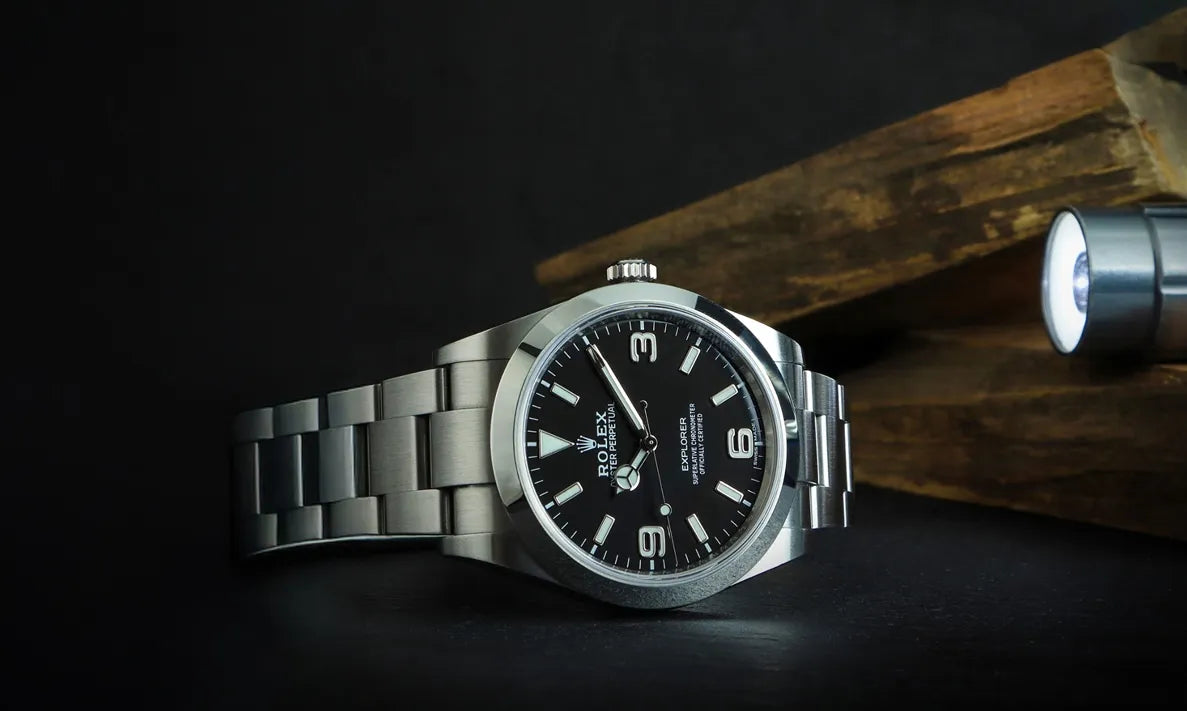

The Rolex Daytona Panda is the collector nickname for a Cosmograph Daytona fitted with a white dial and black chronograph subdials, a high-contrast layout that resembles a panda's face. It's one of the most requested dial configurations in the entire Daytona lineup, prized for its legibility and its sharp, sporty look on the wrist.
Whether you're chasing a modern steel reference or a vintage manual-wind example, the Panda Daytona carries a reputation that goes beyond aesthetics. This guide covers where the nickname came from, which references wear it best, what the specs look like, and what actually drives demand for this dial on the pre-owned market.

What Is the Daytona Panda Dial?
A Panda dial is simply a Daytona with a white or cream dial paired with black subdials for the chronograph counters: the elapsed-time, hour, and small seconds registers. Rolex doesn't use the word "Panda" anywhere on the watch or the box. It's purely a nickname coined by collectors and dealers because of the resemblance to the animal's black and white markings.
The opposite configuration, a black dial with white subdials, is called a "reverse Panda." Both layouts exist across multiple Daytona references, and both are popular, but the white-dial version is the one that gets the bulk of search interest and collector chatter when people say Rolex Daytona Panda.
The look isn't limited to steel models either. Rolex has used the same white-and-black contrast on two-tone and yellow gold Daytonas, references like 116503 and 116508, where the warmer case tone shifts the overall feel from sporty to dressier without losing the legibility that made the configuration popular in the first place.
The nickname has stuck because the contrast does real work. Black subdials on a white face read faster at a glance, which matters on a watch built for timing laps. Browse the current authenticated Rolex Daytona collection at Time of Swiss, and you'll notice the Panda variants are usually the first to sell.
A Brief History of the Daytona Panda Dial
The Panda configuration isn't a recent marketing invention. It dates back to the manual-wind Daytona era of the 1970s and 1980s, specifically references 6263 and 6265, where Rolex offered both black and white dial options with contrasting subdials. Collectors started using "Panda" informally around this time, and the name carried forward into every generation since. Rolex's own catalog and warranty paperwork never reference the nickname directly, listing the configuration simply by dial color, which is part of why secondary market listings rely so heavily on reference numbers to communicate exactly which Panda you're looking at.
When Rolex moved the Daytona to an in-house automatic movement in 2000 with reference 116520, the Panda dial came along for the ride. It became one of the most requested configurations of that 16-year production run, partly because the white dial photographs and wears differently than the black dial most people picture first when they think "Daytona."
In 2016, Rolex introduced reference 116500LN, replacing the steel bezel with a black Cerachrom ceramic bezel. The Panda dial paired with that black bezel created one of the most recognizable combinations in modern Rolex, a watch that routinely sold above retail for years due to limited allocation. The current reference, 126500LN, launched in 2023 with an updated case, a new in-house caliber 4131, and slightly revised dial proportions, but it kept the Panda option that made its predecessor so sought after.

Specs and Key Features
Case and Bezel
The modern Daytona Panda (126500LN) uses a 40mm Oystersteel case with a black Cerachrom monobloc bezel insert and a tachymetric scale, a material chosen for its superior resistance to fading and scratching compared to the aluminum bezels used on older references. The case pairs with a screw-down crown and pushers, maintaining 100 meters of water resistance even during active chronograph use. Earlier Panda references used an aluminum bezel insert in either black or steel, which faded over time with UV exposure, one of the easiest ways to spot an older example next to a current production model.
Movement
Inside is the caliber 4131, a column-wheel chronograph movement with a Chronergy escapement and roughly 72 hours of power reserve, an upgrade from the 4130 used in the 116500LN. If you want a deeper breakdown of how Rolex's chronograph calibers differ across generations, our guide to Rolex movement types covers it in detail.
Dial and Subdials
The dial itself is lacquered white, not painted, which gives it a slight depth compared to flatter white dials on other models. The three black subdials sit in a triangular layout: a 12-hour counter at 6 o'clock, a 30-minute counter at 3 o'clock, and a small seconds register at 9 o'clock, each ringed with a thin white outline that sharpens the contrast even further.
|
Feature |
Daytona Panda (126500LN) |
|
Case Size |
40mm |
|
Case Material |
Oystersteel |
|
Movement |
Cal. 4131, automatic chronograph |
|
Power Reserve |
72 hours |
|
Water Resistance |
100m |
|
Bezel |
Black Cerachrom, tachymetric scale |
|
Bracelet |
Oyster, 3-link |
Panda vs. Reverse Panda vs. Paul Newman
It's easy to lump every contrasting-dial Daytona into one category, but collectors draw real distinctions. A standard Panda has printed subdials with modern typography. A "Paul Newman" dial, named after the actor who famously wore one, refers specifically to an exotic dial style on vintage manual-wind Daytonas, featuring Art Deco numerals and often a stepped, square-ended minute track on the subdials. Paul Newman dials can be configured as Panda or reverse Panda, which is part of why the terms get confused.
Reverse Panda watches, with black dials and white subdials, tend to read as more understated and versatile, while the white-dial Rolex Daytona Panda leans sportier and shows more on the wrist. Neither is objectively better; it comes down to preference, and serious collectors often end up owning both. You can browse the full range of Rolex chronographs in our collection to compare both layouts side by side.
Here's how the main Panda-dial references stack up against each other:
|
Reference |
Era |
Movement |
Notable Detail |
|
6263 / 6265 |
1970s to 1980s |
Manual-wind, Valjoux-based |
Vintage Panda with screw-down pushers |
|
116520 |
2000 to 2016 |
Cal. 4130, automatic |
First in-house automatic Panda |
|
116500LN |
2016 to 2023 |
Cal. 4130, automatic |
Introduced a black Cerachrom bezel |
|
126500LN |
2023 to present |
Cal. 4131, automatic |
Updated case, bracelet, and dial proportions |
Why the Daytona Panda Holds Its Value
Pre-owned Daytonas in general carry strong resale value, and the Panda dial configuration typically sits at or above the average for its reference. Limited production windows, ongoing retail scarcity, and steady collector demand all work in its favor, a combination that's kept pre-owned examples trading at a premium over the years rather than depreciating like a typical luxury good.
Liquidity is part of the appeal, too. Because the Panda dial tends to sell quickly compared with other color options, dealers and private sellers alike treat it as one of the more reliable configurations to move, which keeps the gap between asking and selling prices tighter than on slower-moving variants.
The white dial also has broader appeal than some of Rolex's more polarizing color options, which widens the buyer pool when it's time to resell. If you're curious about what specifically moves the needle on resale value for a chronograph like this, our guide to selling luxury watches breaks down the factors dealers actually weigh.
Vintage Panda references, particularly well-preserved 6263 and 6265 examples, occupy a different tier entirely. Condition, dial originality, and documented provenance matter enormously here, and the right example can trade well above what a modern steel Daytona commands.
Where to Find an Authenticated Daytona Panda
Because demand outpaces retail supply, many Panda Daytonas on the open market come through the grey market or private sellers, which raises the stakes for authentication. Things to check include dial print quality, subdial alignment, case engravings, and movement serial consistency, details that are difficult to verify from a listing photo alone.
Every watch that comes through Time of Swiss is independently authenticated by our team before it's listed, and we're based in Los Angeles if you'd rather inspect a piece in person. If you have a specific reference in mind that isn't currently in stock, our watch sourcing service can track one down for you.
This matters more with Panda Daytonas than with most models, since the dial-swap market for Daytonas has become more sophisticated over the past decade. Buying from a dealer who inspects movements and case backs, not just the dial, protects you from paying Panda dial prices for a watch that's been altered.
A full set with original box, warranty card, and service history adds real value beyond the watch itself, especially on vintage manual-wind examples where paperwork helps confirm the dial hasn't been swapped or refinished. Ask any dealer for documentation before assuming a listing photo tells the whole story.
The Lasting Appeal of the Daytona Panda
From manual-wind references in the 1970s to the current 126500LN, the white-dial and black-subdial combination has remained one of the most requested looks in the Daytona lineup for a reason. It reads fast, photographs well, and wears better than the black-dial alternative most people picture first.
If you're ready to add a Rolex Daytona Panda to your collection, or just want to compare references in person, explore our newest arrivals at Time of Swiss or visit our Los Angeles showroom to see the current lineup up close.

Sell or Trade Your Watch. If you're looking to sell your luxury watch or find out what it's worth, Time of Swiss offers free, no-obligation evaluations. Get started here.
Frequently Asked Questions
What is a Daytona Panda dial?
A Panda dial is a white Daytona dial paired with black chronograph subdials, named for its resemblance to a panda's coloring.
Rolex never uses the term officially; it's a nickname collectors and dealers adopted because of the contrast between the white dial face and the three black subdial counters. The configuration exists across both vintage manual-wind and modern automatic Daytona references.
What is the difference between a Panda dial and a Paul Newman dial?
A Paul Newman dial is a specific vintage exotic dial style with Art Deco numerals, while a Panda dial simply refers to any white dial with black subdials.
A vintage Daytona can technically be both: a Paul Newman dial configured with the white-and-black Panda layout. The Paul Newman designation is about the dial's font and printing style, not the color contrast itself.
Which Rolex Daytona references come with a Panda dial?
The Panda dial has appeared on references 6263, 6265, 116520, 116500LN, and the current 126500LN.
Availability has varied across production runs and retailer allocations, which is part of why pre-owned examples carry a premium. Not every Daytona reference offers a white dial option, so it's worth confirming before you commit to a specific generation.
How much does a Daytona Panda cost on the pre-owned market?
Pricing varies by reference and condition, but pre-owned Panda Daytonas typically trade at or above the going rate for their black-dial counterparts.
Modern steel references have traded above retail for years due to limited supply, while well-preserved vintage examples can command significantly more depending on dial originality and documented history. Market value shifts, so it's worth checking current listings rather than relying on older price guides.
Where can I buy a Panda dial Daytona?
Time of Swiss offers an independently authenticated, curated collection of pre-owned Daytonas, including Panda dial references when available.
Every piece is inspected by our team before listing, and we can also source specific references through our watch sourcing service if what you're looking for isn't currently in stock. Shop the authenticated Rolex Daytona collection, including Panda dial references, or visit our Los Angeles showroom.